


The International Automobile Federation (FIA) announced on Friday that the power split of Formula 1 engines will shift starting in 2027. Currently, the power unit is divided between an internal combustion engine and an electric component, with a roughly 50-50% distribution this year. However, the split will move to 60-40% in favor of the internal combustion engine next year.
The change was revealed following an online meeting held by the FIA, attended by team principals, F1 management, and representatives of the five engine suppliers: Mercedes, Ferrari, Ford, Audi, and Honda.
Since the start of the 2026 season, engines have faced criticism from drivers and teams due to low energy recovery capacity, raising safety concerns, excessive battery management techniques, and an increase in overtakes—a point that divides opinion, with some praising the action and others labeling it “artificial.” With this adjustment, the FIA aims to reduce these controversies.
The electric element gained significant prominence with the introduction of new engine regulations in 2026. Previously, it contributed only 120kW of the car’s total power, while the internal combustion engine provided 550kW. Under the 2026 rules, the electric portion rose to 350kW—an increase of nearly 300%—while the combustion part dropped from 550kW to 400kW, resulting in a split of approximately 53-47%, though it was publicly presented as 50-50% for simplicity.
With the announced change, the internal combustion engine will gain about 50kW, reaching 400kW, while the Energy Recovery System (ERS) loses 50kW, dropping to 300kW. Additionally, the fuel flow rate will also increase.
The next step to validate the 2027 rules is an online vote, followed by approval from the FIA World Motor Sport Council. Since the parties have already reached a preliminary agreement, this is not expected to be an obstacle.
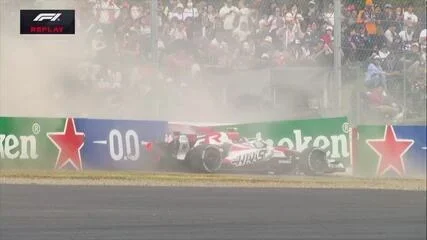
The parties involved also reviewed changes implemented by the FIA during the April break of the Formula 1 season. One goal of these modifications was to improve driver safety, following strong demands for regulatory changes after Oliver Bearman’s heavy crash in Japan. Additionally, the FIA sought to address complaints about excessive energy management, including techniques like “superclipping,” where a car’s electric system used power to recharge the battery at the end of a straight even when the driver was at full throttle. The aim was to reduce reliance on such techniques and make overtaking less artificial.
The FIA stated that
